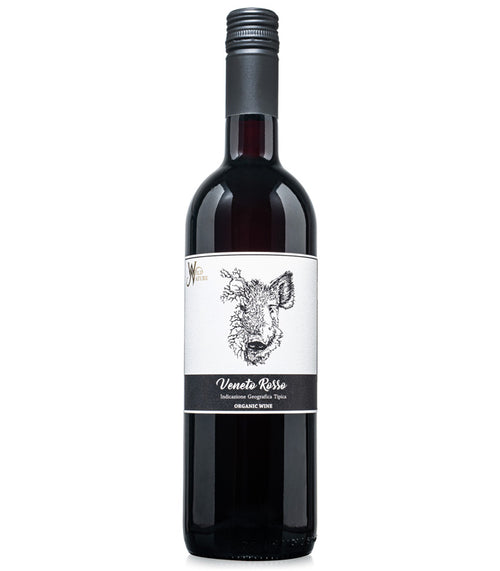

Italian Wines
Italy has more native grape varieties than any other country and produces wine in all twenty of its administrative regions, from the Alps down to Sicily. It also, as it... Read more
WINE
WINE
SHOP BY WINE TYPE
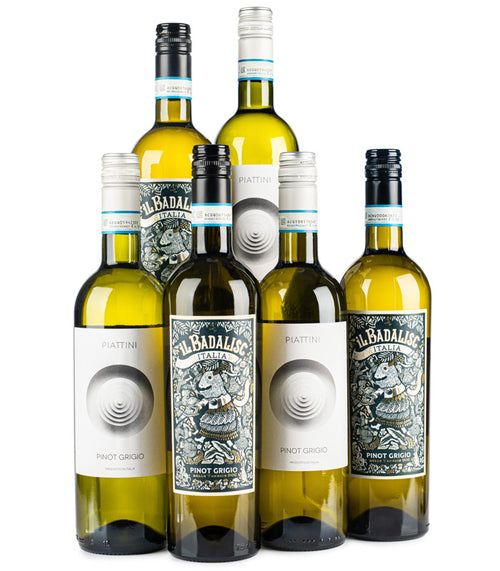
SHOP PRE-MIXED CASES
SHOP BY DIETARY REQUIREMENT
BEER
BEER
Italy has more native grape varieties than any other country and produces wine in all twenty of its administrative regions, from the Alps down to Sicily. It also, as it... Read more
Italy has more native grape varieties than any other country and produces wine in all twenty of its administrative regions, from the Alps down to Sicily. It also, as it happens, produces some of the lightest wine you can buy.
The Italian wines here run from 76 calories a glass, which is lower than our French range, and there is a straightforward reason why. Every bottle lists its calorie count, sugar content and ABV.
Alcohol carries around 7 calories per gram and is the biggest single contributor to the calorie count of any dry wine. So the strength of the wine does most of the work, and Italian whites tend to be lighter than their French and Spanish equivalents.
Northern Italy is the reason. Vineyards in the Veneto, Friuli, Trentino and Lombardy sit in the foothills of the Alps, where cooler nights slow ripening and preserve acidity. Grapes picked there carry less sugar, which ferments into less alcohol, which means fewer calories in the glass.
That is why eight of the wines in this collection sit at 11% ABV, and why the lightest come in at 76 calories per 125ml.
| ABV | Calories per 125ml | Typical style |
|---|---|---|
| 11% | 76 to 78 | Northern Pinot Grigio, Prosecco, rosé |
| 11.5% | 80 to 84 | Prosecco DOCG, sparkling rosé |
| 12% | 83 to 85 | Fuller Pinot Grigio, Pinot Grigio Blush |
| 12.5% | 86 | Sangiovese, southern whites |
| 13% | 91 | Chianti and Tuscan reds |
Roughly 6 to 7 calories for every percentage point of alcohol. The gap between the lightest Pinot Grigio and a Chianti is 15 calories a glass, or 90 across a bottle.
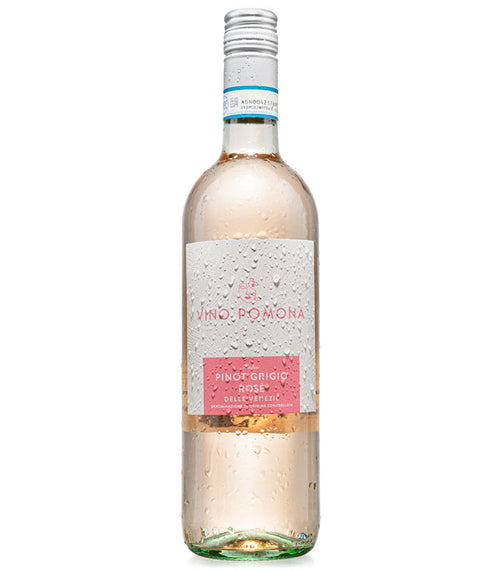
Half of this collection is Pinot Grigio, and it is the most popular Italian white in Britain for good reason. Dry, crisp, light-bodied and easy to drink, with citrus, pear and green apple rather than anything heavy or oaked.
Most Italian Pinot Grigio comes from the north east, principally the DOC delle Venezie, which covers the Veneto, Friuli and Trentino. Cool sites, early picking and stainless steel fermentation give it its freshness, and keep the alcohol down around 11 to 12%.
Our lightest sit at 76 calories a glass at 11% ABV, with 0g of sugar. The fuller examples reach 86 at 12.5%, which is still below most supermarket whites.
There is also Pinot Grigio Blush, which is made from the same grape. Pinot Grigio skins are greyish pink rather than green, so brief skin contact produces a pale rosé while the juice pressed straight off makes white wine. Same grape, two colours.
Prosecco comes from the Veneto and is made from the Glera grape, using the tank method rather than the bottle fermentation used in Champagne. That is why it tastes fresher and more floral, and why it is generally lighter.
The sweetness classification on the label matters more than the brand. Brut is the driest commonly available style, and Extra Dry, despite the name, is sweeter. Our Prosecco range starts at 78 calories a glass with 0g of sugar.
There is more on this in our guides to how much sugar is in Prosecco and calories in Prosecco.
Sangiovese is Italy's most planted red grape and the backbone of Chianti. Medium-bodied, high in acidity, with sour cherry and herb notes and a savoury finish that makes it one of the best food wines there is.
Tuscan Sangiovese, sold as Chianti, tends to be fuller and stronger at around 13%. Sangiovese grown further south in Puglia is riper and softer while sitting slightly lower in alcohol, which puts it around 86 calories a glass.
Veneto
The largest wine-producing region in Italy, in the north east. Home of Prosecco, Soave and Valpolicella, and the source of most of the Pinot Grigio sold in Britain. Cool climate, fresh whites, lower alcohol.
Tuscany
Central Italy, and the most famous region internationally. Sangiovese dominates, producing Chianti, Brunello di Montalcino and Vino Nobile di Montepulciano. Warmer than the north, so the wines carry more weight and more alcohol.
Puglia
The heel of Italy, hot and sunny, and long the source of bulk wine before its reputation improved. Primitivo, Negroamaro and Sangiovese grown here are riper and rounder than their northern equivalents.
Piedmont
North west Italy, and Tuscany's great rival. Nebbiolo is the signature grape, producing Barolo and Barbaresco, alongside Barbera and Dolcetto. Also the home of Asti and Moscato.
Vines have been cultivated in Italy for at least three thousand years. The Greeks who colonised the south around 800 BC were impressed enough to call it Oenotria, the land of wine, and the Etruscans were making wine in central Italy at the same time.
Rome turned it into an industry, planting vineyards across the empire and establishing much of the viticulture that later became French and Spanish tradition. As with French wine, it was the monasteries that preserved the knowledge after Rome fell, and the modern DOC and DOCG system that governs Italian wine today was only established in 1963.
The lightest: northern Pinot Grigio and Italian rosé at 11% ABV, from 76 calories a glass with 0g sugar.
For sparkling: Prosecco in the Brut style, from 78 calories. Lighter than most Champagne, which tends to run half a percent to a percent stronger.
For red: Sangiovese from Puglia at 86 calories, or Chianti at 91 if you want the fuller Tuscan style.
For rosé: Pinot Grigio Blush and Italian rosé, dry rather than sweet, from 76 calories.
Our guide to which wines have the lowest sugar content covers the styles in more detail.
Which Italian wine has the fewest calories?
Northern Italian Pinot Grigio and Italian rosé at 11% ABV, which come in at 76 calories per 125ml glass in this collection. Prosecco is close behind at 78.
Is Pinot Grigio low in calories?
Comparatively, yes. Italian Pinot Grigio is typically 11 to 12% ABV against 13% or more for many other whites, and it is made dry, so a glass carries around 76 to 86 calories.
Is Prosecco lower in calories than Champagne?
Usually, and mostly because it is weaker. Prosecco is generally 11 to 11.5% ABV against 12 to 12.5% for Champagne, which is worth roughly 10 calories a glass.
Is Pinot Grigio Blush a rosé?
Yes. It is made from the same Pinot Grigio grape, whose skins are greyish pink. Brief contact with the skins gives the wine its colour. Pressed straight off, the same grape makes white wine.
Is Italian wine drier than French wine?
Not as a rule, though Italian whites tend to be higher in acidity, which makes them taste crisper. Both countries make wines across the full range of sweetness, and the label is a better guide than the country.
What does DOC mean on an Italian wine label?
Denominazione di Origine Controllata, a quality classification introduced in 1963 that specifies where a wine can be made, which grapes may be used and how. DOCG adds a further guarantee and sits above it.
| White wine | Pinot Grigio, Sauvignon Blanc and Chardonnay |
| Sparkling wine | Prosecco, Cava, Champagne and sparkling rosé |
| Rosé wine | Italian, Provence and New World rosé, all made dry |
| TRACES | Our own label, including a Prosecco DOC Treviso at 78 calories |
| French wine | Bordeaux, Provence rosé, Languedoc and Champagne |
| Mixed cases | Better value at 6 and 12, and a way to try the range |
Keep up to date with all of our latest products & promotions. We regularly run promotions and discounts, along with listing new and exciting products.
We never share your information! View our Privacy Policy