
French Wine
France produces more wine than almost anywhere on earth, across roughly 750,000 hectares of vineyard, and it gave the world most of the grapes now grown everywhere else. Cabernet Sauvignon,... Read more
WINE
WINE
SHOP BY WINE TYPE
SHOP PRE-MIXED CASES
SHOP BY DIETARY REQUIREMENT
BEER
BEER
France produces more wine than almost anywhere on earth, across roughly 750,000 hectares of vineyard, and it gave the world most of the grapes now grown everywhere else. Cabernet Sauvignon,... Read more
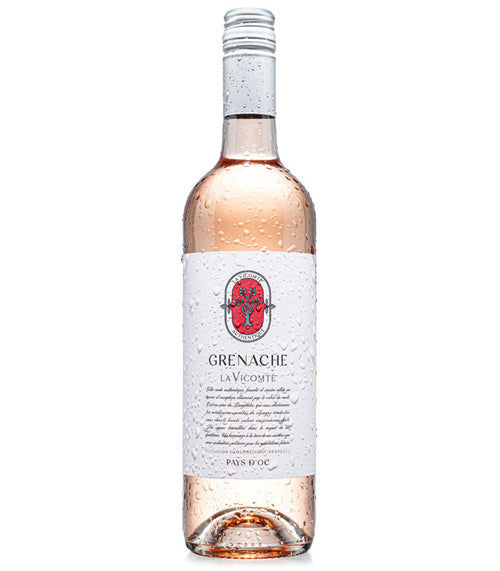
France produces more wine than almost anywhere on earth, across roughly 750,000 hectares of vineyard, and it gave the world most of the grapes now grown everywhere else. Cabernet Sauvignon, Merlot, Chardonnay, Sauvignon Blanc, Pinot Noir and Syrah are all French in origin.
What is less widely known is that where a French wine comes from tells you a great deal about how many calories are in the glass. Every bottle in this collection lists its calorie count, sugar content and ABV, so you can see it rather than guess.
Alcohol carries around 7 calories per gram and is the largest single contributor to the calorie count of any dry wine. Residual sugar adds the rest, and in a fully dry wine there is almost none.
Which means the strength of the wine does most of the work. Across our own French range the pattern is almost exactly linear:
| ABV | Calories per 125ml | Example |
|---|---|---|
| 11% | 78 | TRACES Rosé, Domaine La Colombette Sauvignon |
| 12% | 82 to 84 | Chateau Le Chene Bordeaux, Les Oliviers Chardonnay |
| 12.5% | 87 | Les Volets Malbec |
| 13% | 91 | Les Volets Pinot Noir, Pour Le Vin Merlot |
| 13.5% | 94 | Ordinal Cabernet Sauvignon |
Roughly 6 to 7 calories for every percentage point of alcohol. Two and a half percent separates the lightest French wine here from the heaviest, and that is worth about 16 calories a glass, or 96 across a bottle.
Grapes ripen faster in warm climates and produce more sugar, and more sugar ferments into more alcohol. So the further south a French vineyard sits, the stronger the wine tends to be.
Cooler regions, generally lighter: the Loire Valley, Champagne and Alsace typically produce wines between 11.5% and 12.5%. Crisp, higher in acidity, and lower in calories as a consequence.
Warmer regions, generally fuller: the southern Rhône, Bordeaux and parts of Languedoc regularly reach 13.5% to 15%. More body and more weight, and 15 to 25 more calories a glass.
It is a tendency rather than a rule. Producers make choices about picking dates and fermentation that override climate, which is why a Languedoc Sauvignon in this collection sits at 11% while a Cabernet from the same broad region reaches 13.5%. Our Sauvignon Blanc calorie guide looks at one grape across several countries.
The largest fine wine region in France, in the south west, with around 111,000 hectares under vine. Predominantly red, built on Cabernet Sauvignon and Merlot, both of which originated here. Traditionally full-bodied and structured, though organic and lighter-styled Bordeaux is increasingly common.
The home of dry rosé and the region that set the global template for it. Pale, delicate, built on Grenache and Cinsault, and made dry rather than sweet, which is why a good Provence rosé carries so little sugar.
France's largest wine-producing area by volume, stretching along the Mediterranean coast. Historically overlooked, now some of the best value in the country, with Grenache, Syrah, Cinsault and increasingly good Sauvignon Blanc and Chardonnay.
The only region permitted to use the name, north east of Paris. Cool climate, high acidity, and the traditional method of second fermentation in bottle. Brut Nature champagne, made with no added sugar after disgorgement, is the driest style available anywhere.
Syrah in the north, Grenache in the south. Warm, generous and typically higher in alcohol than anything else on this list, which is the trade-off for the depth of flavour.
Winemaking arrived in southern France around 600 BC, when Greek settlers founded the colony of Massalia, now Marseille, and planted vines along the coast. The Romans expanded it considerably, licensing production across the south and pushing vineyards north into Burgundy and the Rhône.
After the fall of Rome it was the monasteries that kept the knowledge alive. Benedictine and Cistercian monks in Burgundy spent centuries mapping which slopes produced the best fruit, and that work became the basis of the modern appellation system, which still governs where each French wine can be made and how. Our full guide to French wine goes into the regions and classifications in more detail.
If you want the lightest: look for 11% ABV. Our French wines at that strength come in at 78 calories a glass, including the TRACES range and the Domaine La Colombette wines from Languedoc.
If you want a classic red: Bordeaux and Malbec sit in the 82 to 87 range, which is lower than most supermarket reds at 13.5% or 14%.
If you want rosé: Provence and Languedoc rosé between 11% and 12%, dry rather than sweet, from 78 calories.
If you want sparkling: French sparkling made in the Brut or Brut Nature style carries the least sugar of any sparkling wine. Availability of individual Champagnes varies, so check the sparkling collection for what is in stock.
Every product page lists calories, sugar and ABV, so you can compare directly rather than working it out from the label. There is more on how the numbers work in our guides to which wines have the lowest sugar content and calories in a bottle of red wine.
Which French wine has the fewest calories?
The lightest French wines in this collection are 11% ABV and come in at 78 calories per 125ml glass. As a rule, the lower the ABV and the drier the wine, the fewer the calories.
Is French wine lower in calories than other wine?
Not by nationality. It depends on strength and sweetness rather than country. French wines from cooler regions such as the Loire and Champagne tend to be lower in alcohol and therefore lower in calories than wines from hot climates, wherever those are.
Which French wine is driest?
Brut Nature champagne, which has no sugar added after disgorgement. Among still wines, most French reds and Provence rosé are made fully dry, with 0g of residual sugar per serving.
Is Provence rosé low in sugar?
Generally yes. Provence rosé is made dry by tradition rather than sweetened, which is what distinguishes it from many New World rosés. The wines in this collection carry 0g of sugar per serving.
What is the difference between Bordeaux and Burgundy?
Grapes and style. Bordeaux is built on Cabernet Sauvignon and Merlot, usually blended, and tends to be fuller. Burgundy uses Pinot Noir for reds and Chardonnay for whites, usually as single varieties, and tends to be lighter and more aromatic.
Some are and some are not, depending on how they were clarified. Vegan status is listed on every product page here, and our guide to whether red wine is vegan explains why the difference exists.
| Rosé wine | Provence and Languedoc rosé, dry rather than sweet |
| Red wine | Bordeaux, Malbec, Pinot Noir and more |
| Sparkling wine | Champagne, Crémant and French sparkling |
| TRACES | Our own label, made in France, 78 calories a glass |
| Italian wine | Pinot Grigio, Sangiovese and Prosecco |
| Mixed cases | Better value at 6 and 12, and a way to try the range |
Read less
Keep up to date with all of our latest products & promotions. We regularly run promotions and discounts, along with listing new and exciting products.
We never share your information! View our Privacy Policy